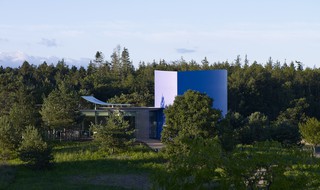
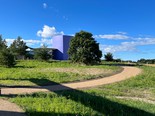
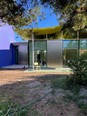
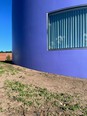
The pavilion at Kvadrat Headquarters is complete. The building, set in the coastal dunes surrounding the textile company’s headquarters in Ebeltoft, on the east coast of Denmark, is a design collaboration with the artist Thomas Demand.
The pavilion's form is inspired by the combination of three ‘found’ objects chosen by the artist: a piece of yellow legal paper, a paper plate, and an American soda jerk’s hat. The three objects are assembled as a still life on a gentle hillock within the landscape; they provide a meeting room, a small kitchen, and a larger flexible living room that holds a hanging textile piece by the artist Rosemarie Trockel.
Main photo by Nic Tenwiggenhorn, courtesy of Thomas Demand
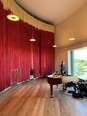
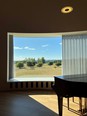
Photos below by Caruso St John Architects
Related news
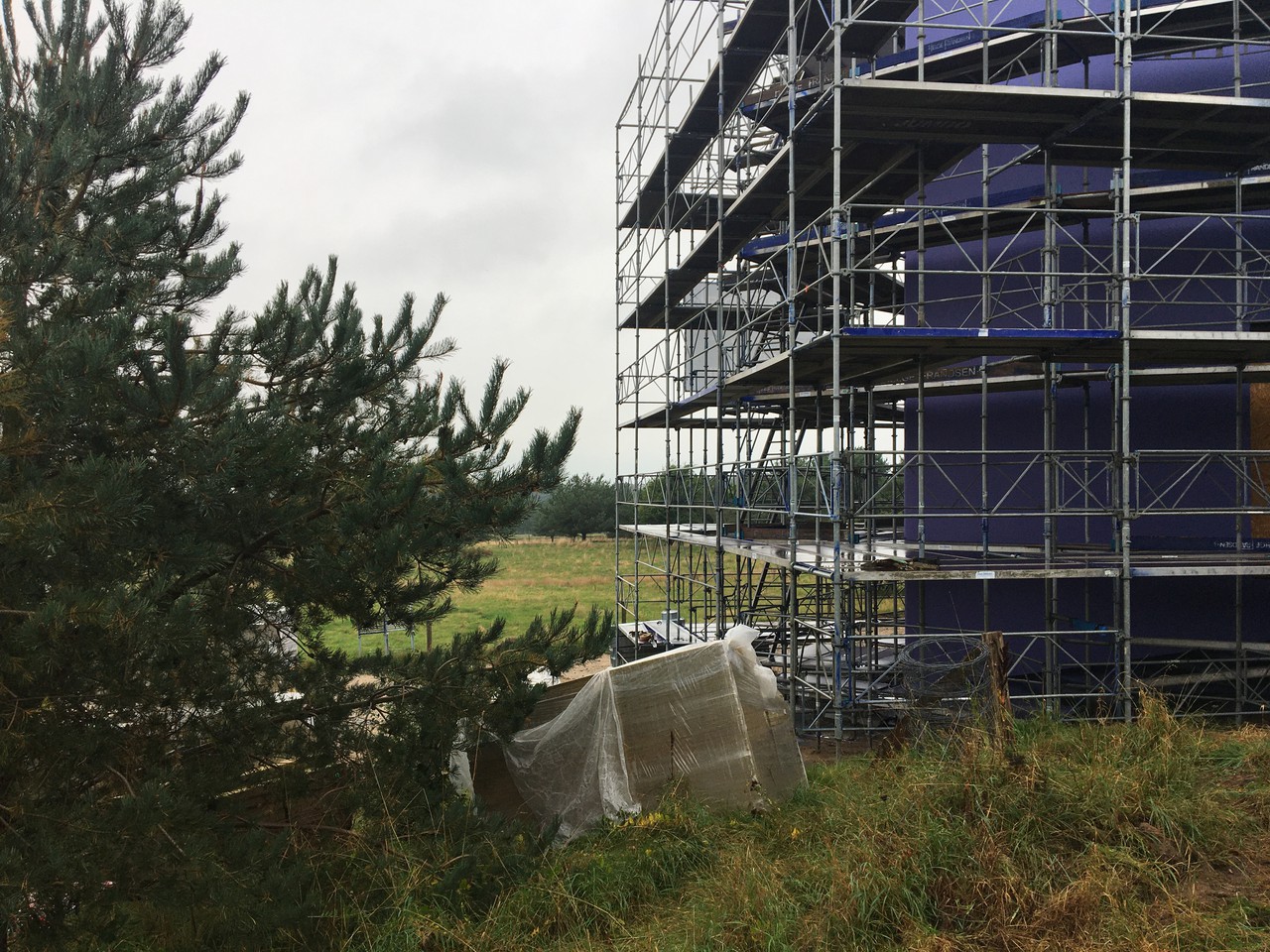
Construction work continues on the Kvadrat Pavilion in Ebeltoft. The hospitality and conference space is a collaboration with artist Thomas Demand, located in the coastal dunes surrounding Kvadrat's headquarters.
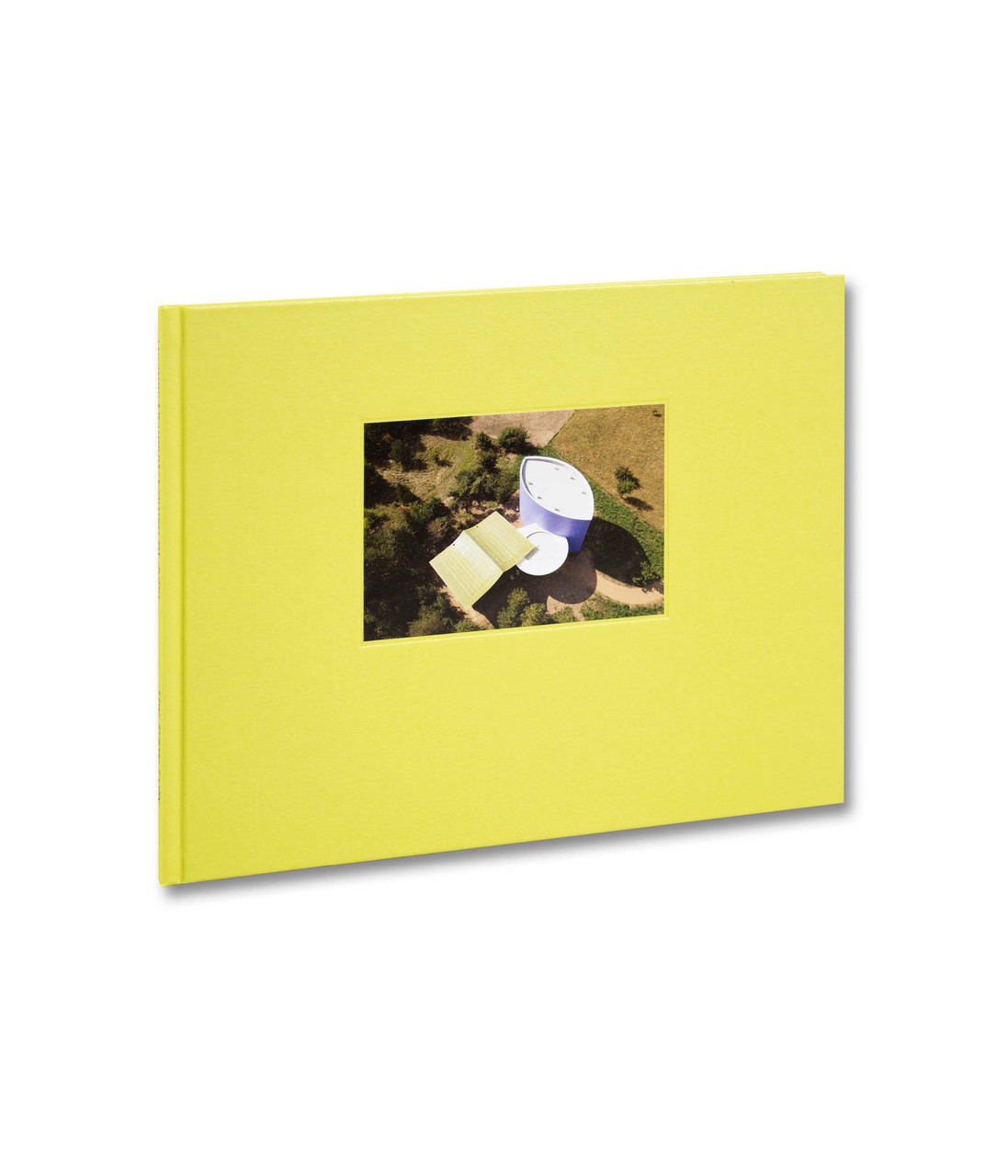
Published by Mack Books, The Triple Folly presents an account of the collaboration between Thomas Demand, Caruso St John, and textile manufacturers Kvadrat, which led to the construction of the new pavilion at Kvadrat's headquarters in Ebeltoft, Denmark.
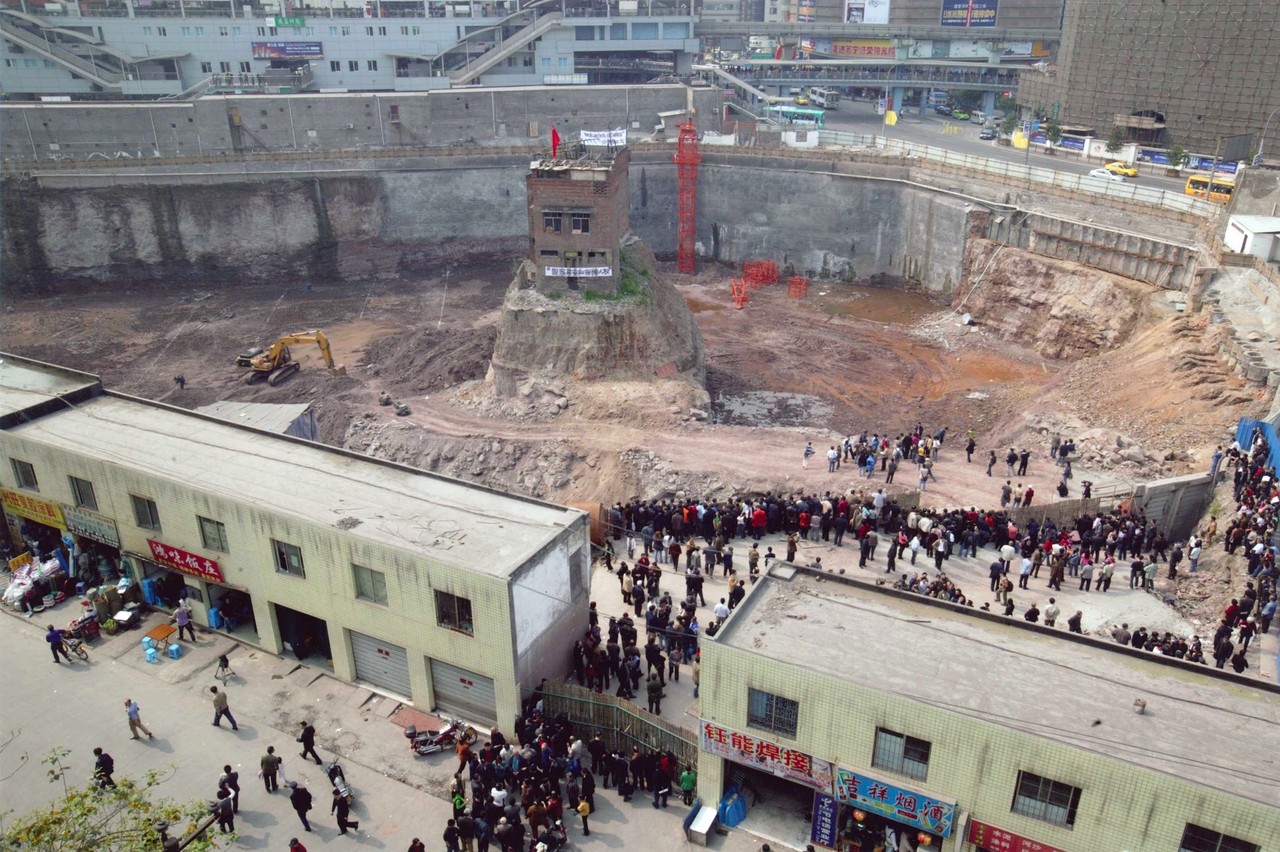
Matthew Blunderfield interviewed Thomas Demand in his Berlin Studio for Scaffold Podcast. Alongside discussing his practice in reference to trauma, fiction and chance, they explore his relationship with architecture. When talking about his collaborations with Caruso St John on Nagelhaus and The Triple Folly, Demand explains his position as both close to and separate from the role of architects.
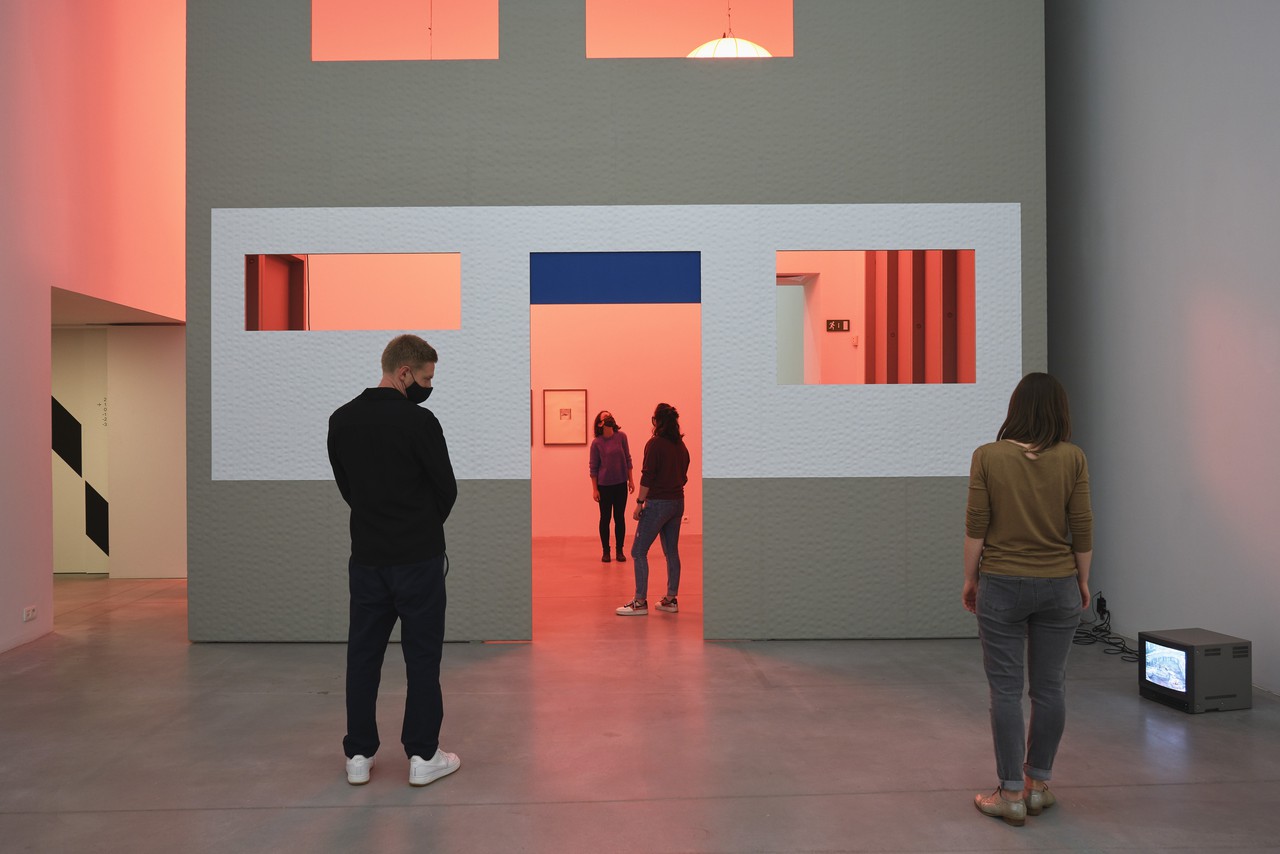
M Leuven presents a major retrospective of the work of the artist Thomas Demand, featuring two works made by the artist in collaboration with Caruso St John: The unrealised Nagelhaus and the soon to be built pavilion at the headquarters of fabric manufacturers Kvadrat in Ebeltoft, Denmark.
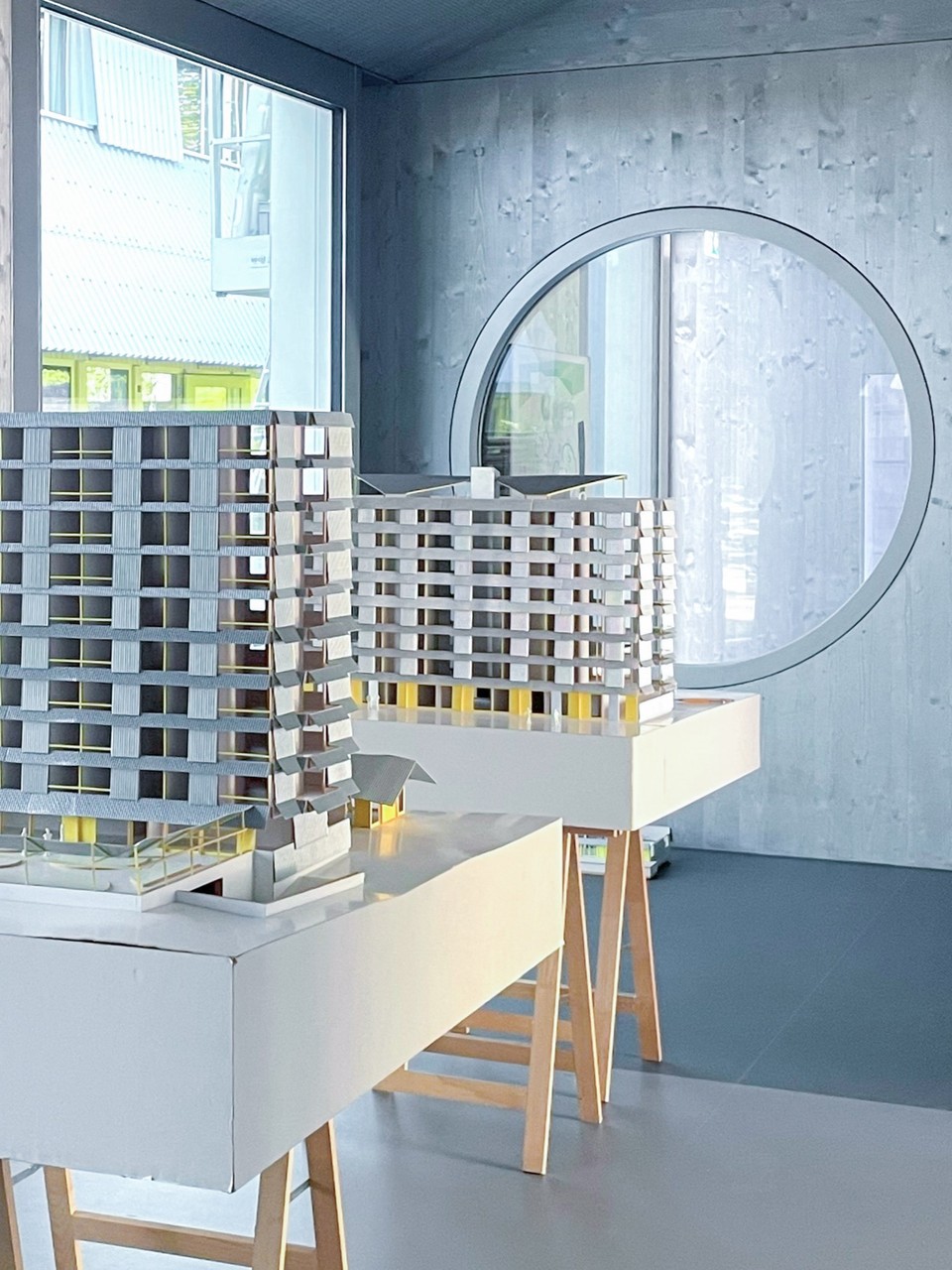
Last Saturday, we opened the doors of the Gutstrasse Cooperative buildings to the public. The project consists of two tall apartment buildings, each accompanied by a smaller, pavilion-like building: a diamond-shaped kindergarten on the north side, and a long, slim building with new offices for the cooperative on the south side. The buildings on the north side are now complete: the first tenants have moved in and the kindergarten is open.
In collaboration with Lütjens Padmanabhan ArchitektInnen.
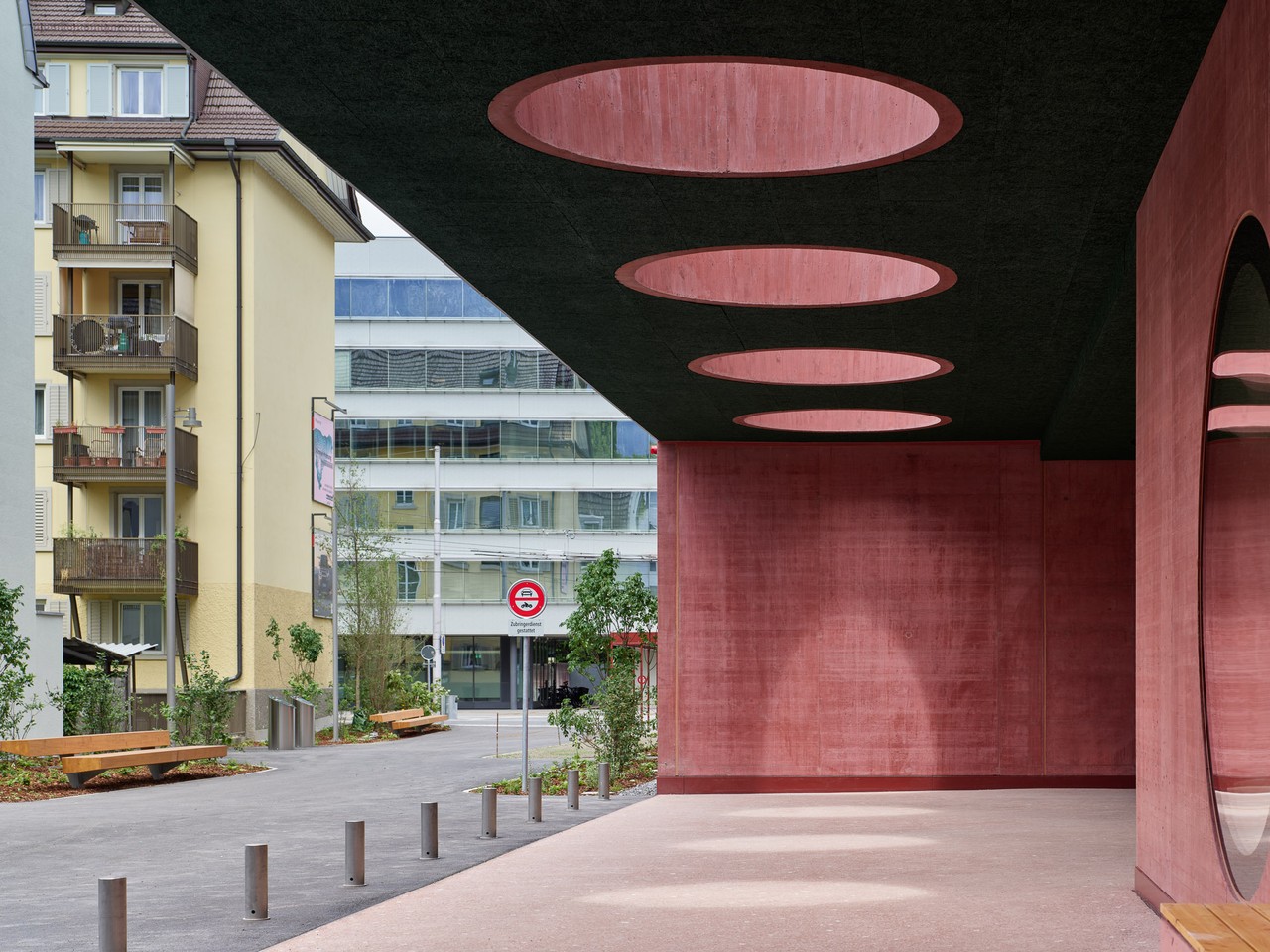
The new residential and commercial development in Tribschen has reached completion and is handed over to the client on schedule. Comprising of 147 flats alongside ground-floor retail spaces, the building welcomed its first occupants this summer.
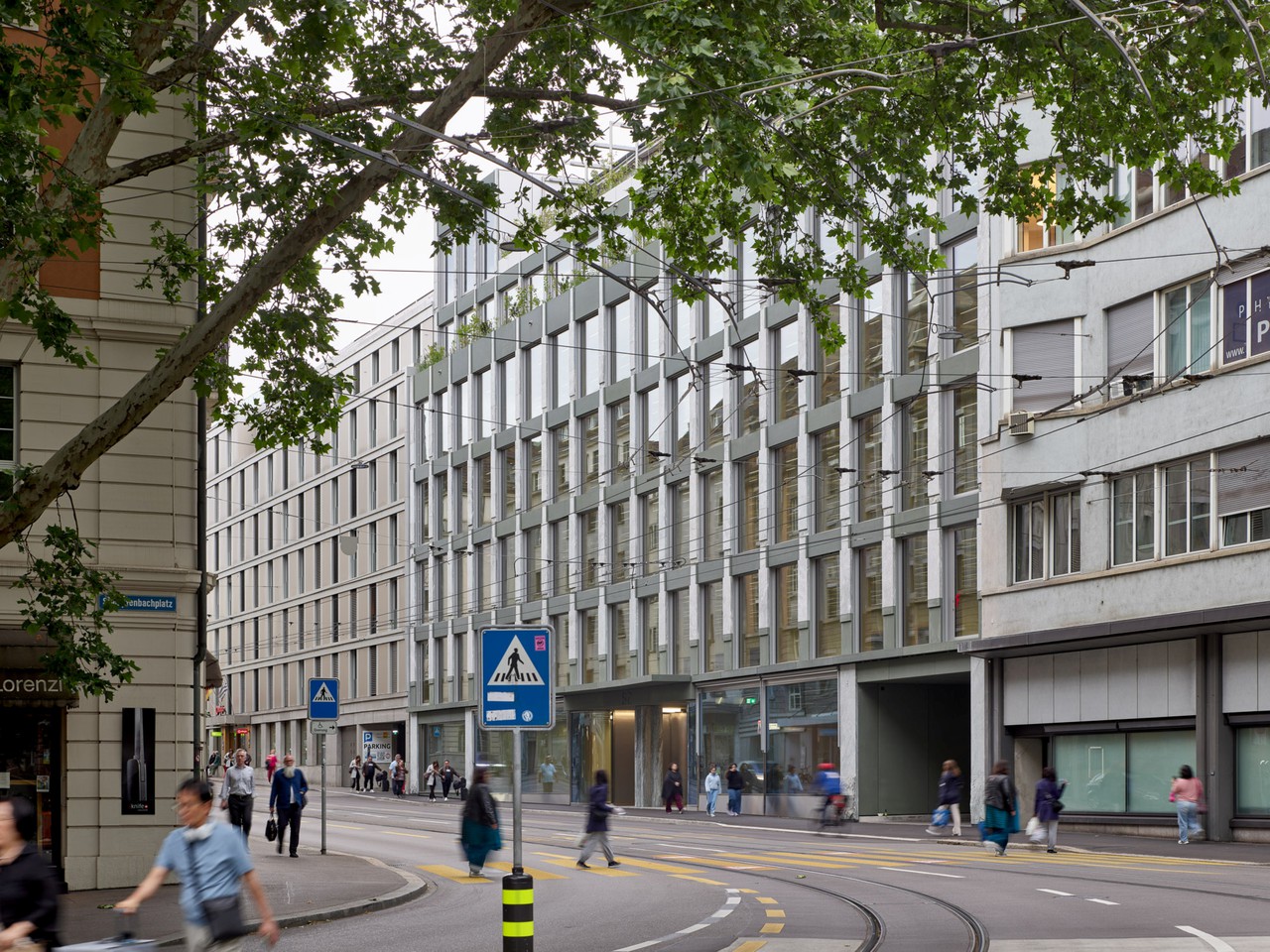
The construction of a new office building for insurance company AXA has now been completed on Stampfenbachstrasse in Zurich.
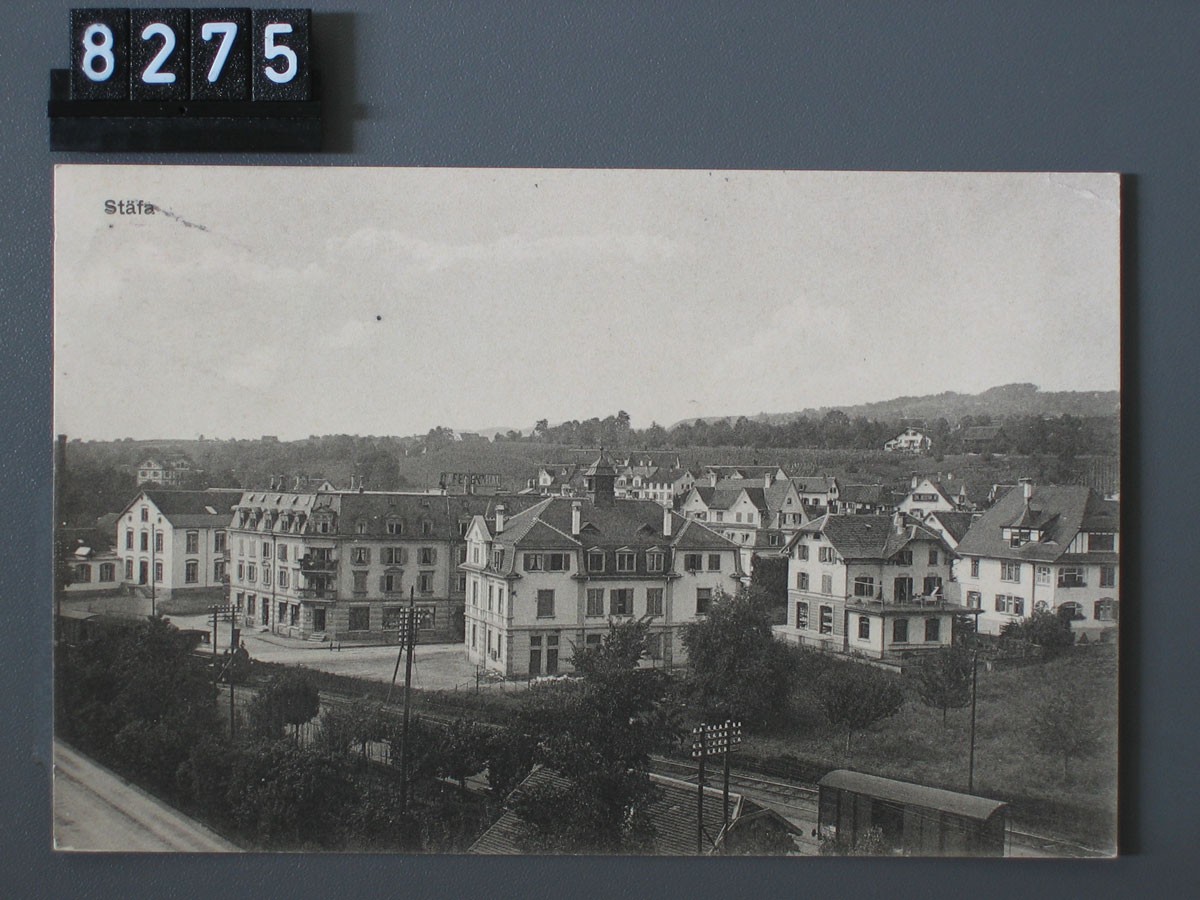
Planning permission has been granted for the renovation of a late 19th century building — part of an urban ensemble previously housing the Café Central — into four shared apartments with a planted courtyard and a terrace overlooking the Zurich lake. Construction is due to start in autumn 2026.
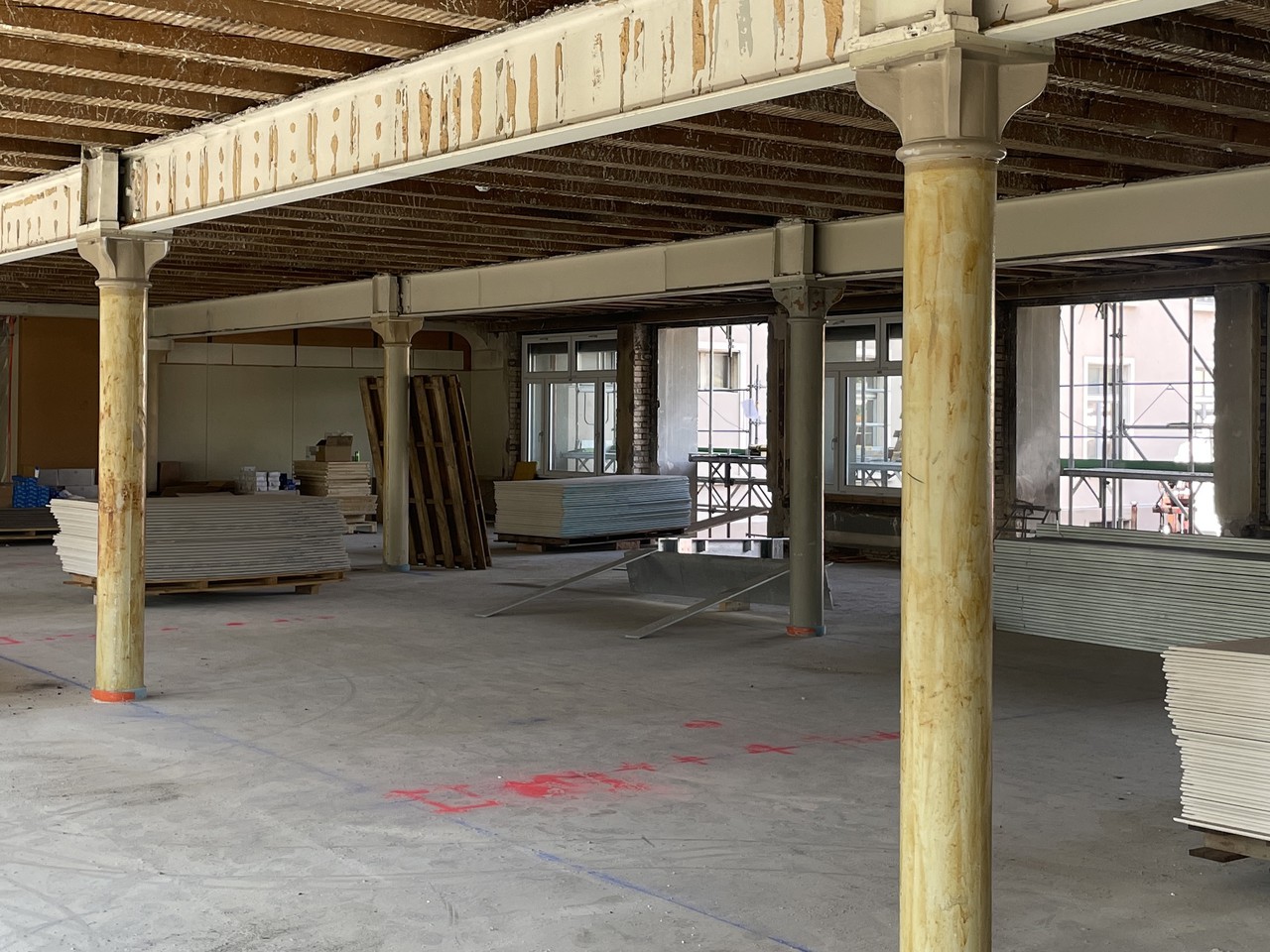
The renovation work has begun on Haus zum Magazin, a former administrative building of the Bally shoe factory dating from 1903. Various layers from previous era's were removed to expose the original steel columns and timber ceilings. Existing windows were retained and sometimes reinforced with new glazing assemblies, and new openings are being cut into the facade to create balconies. The project aims to balance the clearly discernible existing structure and the new residential use.
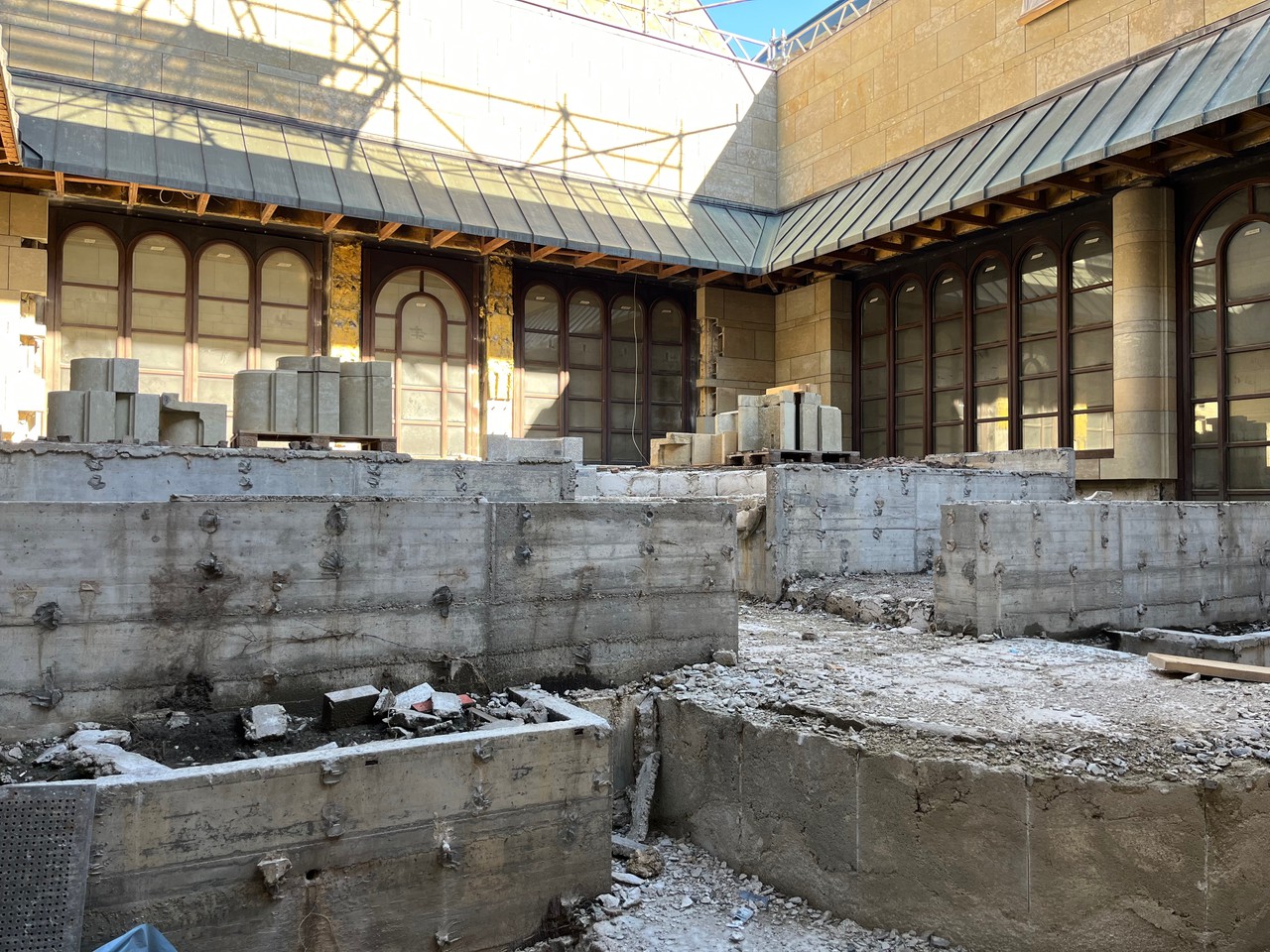
Work on the refurbishment of the Neue Pinakothek is now well underway. Re-use sits at the heart of the project: original stonework is being carefully dismantled, cleaned, and catalogued before being reinstated following the upgrade of insulation and building services. A precise labelling system and dedicated on-site storage are central to making this process work.
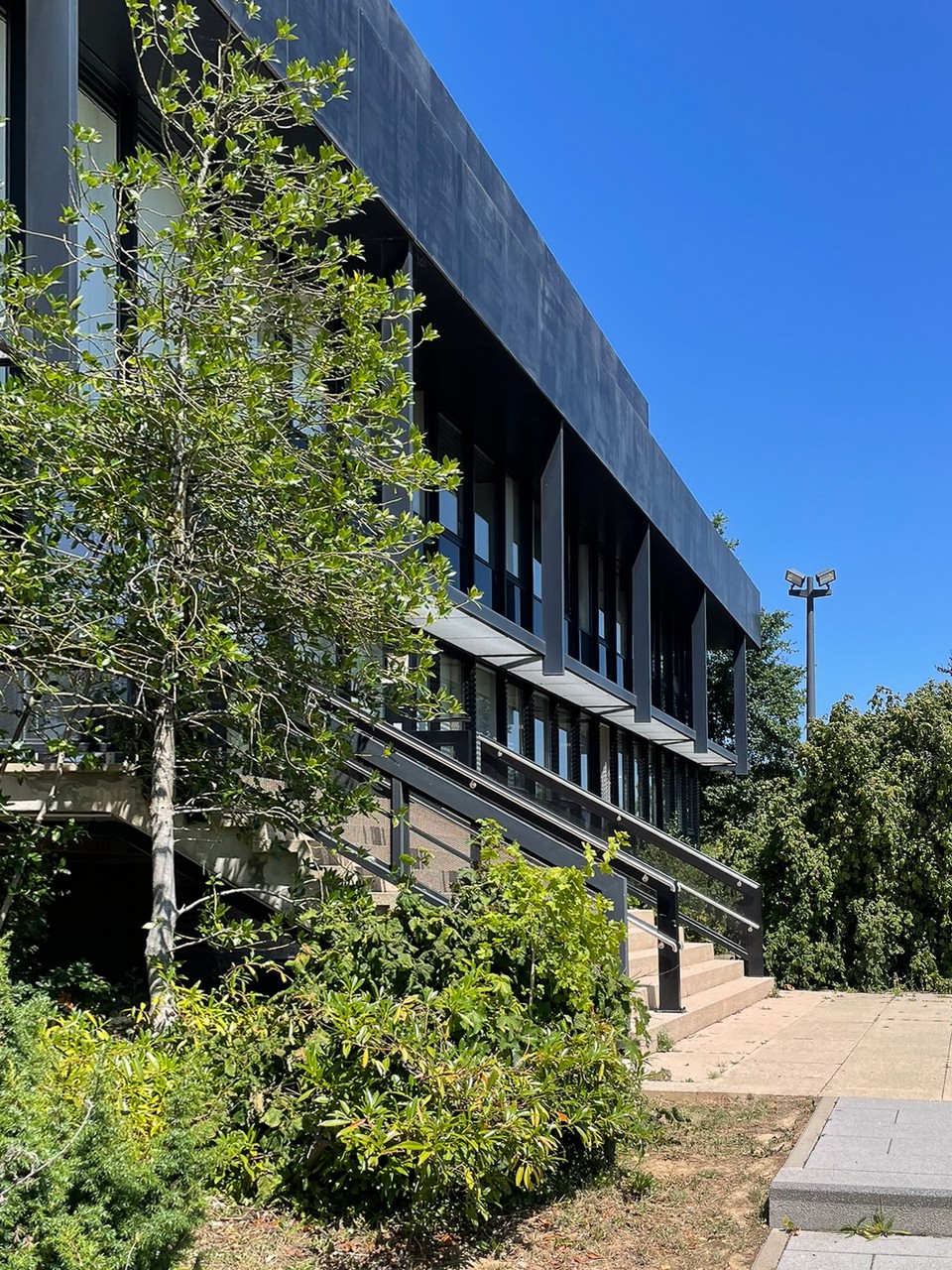
Caruso St John Architects, together with Studio SNCDA, have been appointed as architects for the renovation and extension of the Schwaarzt Haus, a social and community centre in Cents, Luxembourg.
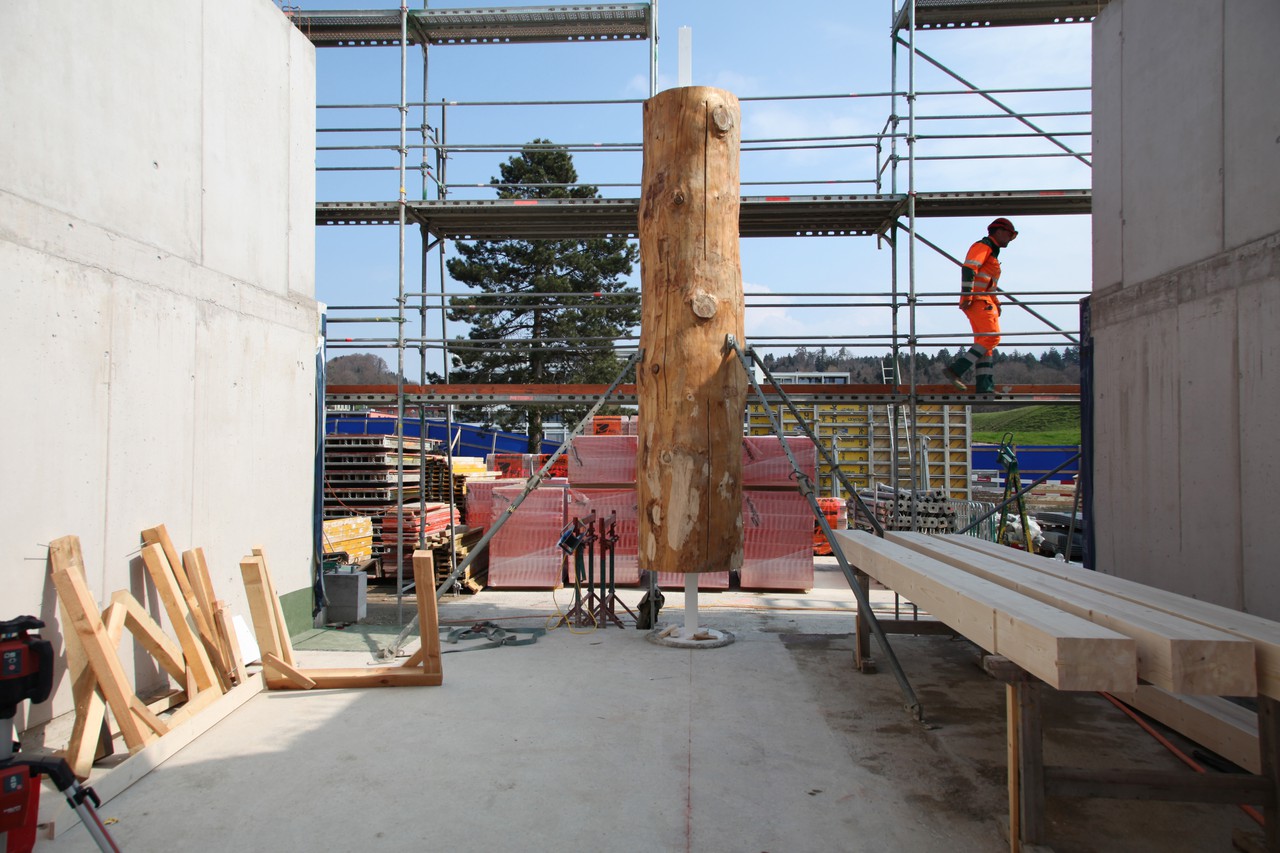
Two load-bearing Atlas cedar columns will highlight the passageway in the center of the apartments in Eggen. The tree trunks come from the forests of the Occitane region in southwestern France, near Figeac, and were around 120 years old when cut.